Where was it built?
Doncaster, England, in the United Kingdom.
The London and North Eastern Railway built Mallard to Nigel Gresley’s A4 design.
 RAIL ATLASby Train Life
4-6-2
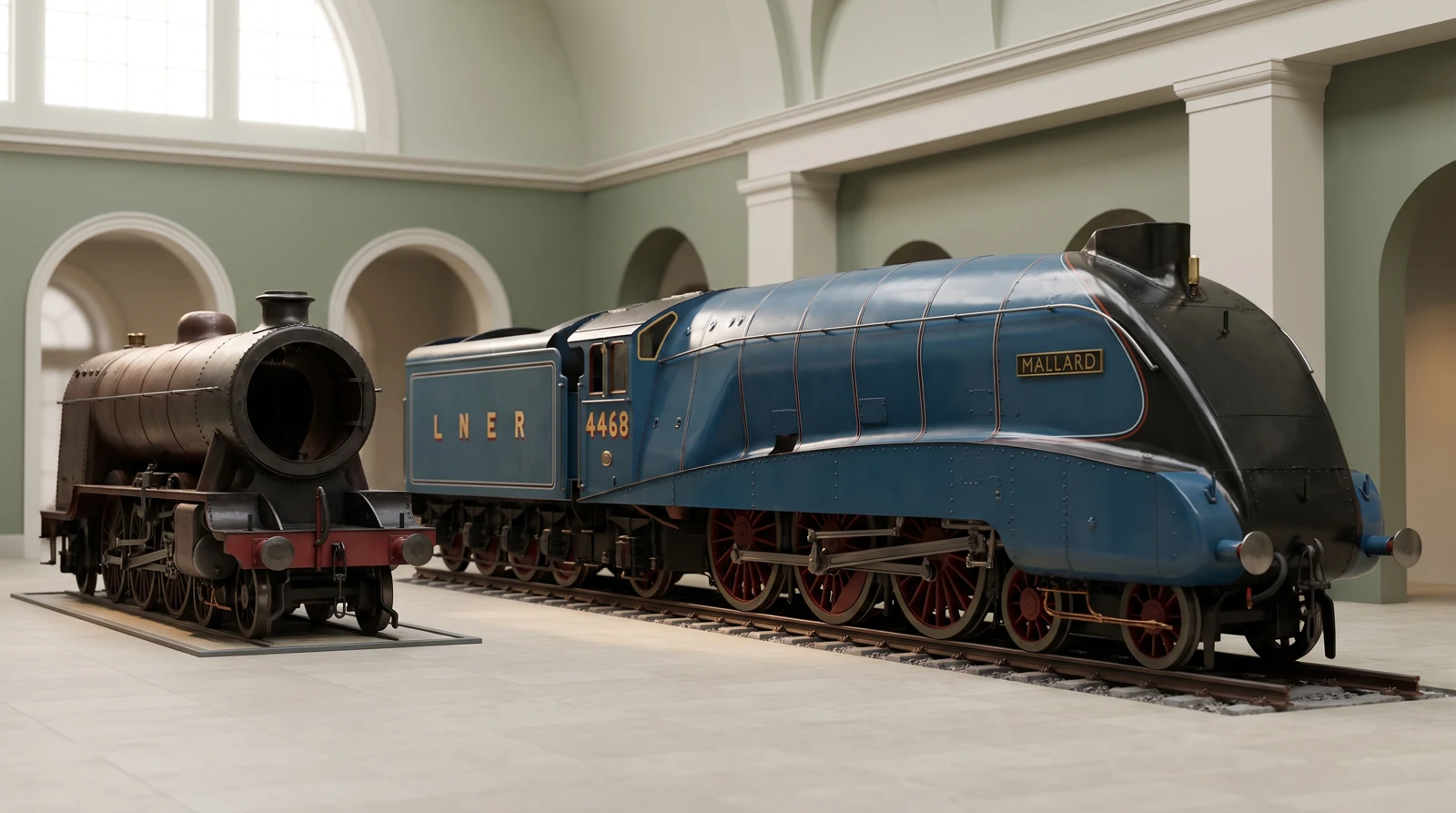
Mallard is a British steam engine with a smooth blue cover over its machinery. In 1938 it reached 126 mph on a special record run. That record was not its everyday passenger speed.
Drag to turn · Pinch to zoom · Tap a number to explore
Heat turns water into steam. Steam pushes pistons, and rods turn the wheels. Explore the boiler, cab, running gear and supplies.
Hot gases pass through the boiler and into the smokebox before leaving through the chimney. Look underneath: a curved support called a saddle holds the front on the locomotive’s frame.
Mallard reached 126 mph on 3 July 1938. This is a special record run, not its normal service speed. The book’s 125 mph figure is corrected here.
The crew works here. On a conventional steam locomotive, the fireman tends the fire and the driver controls the engine.
A locomotive’s cab is a workplace, not a passenger compartment. Some early engines had little shelter for their crews.
The chimney carries exhaust away. Steam domes help collect steam above the water in the boiler.
Steam and smoke are different: steam is water vapour, while smoke comes from burning fuel. Equipment varies by locomotive.
Steam pushes pistons. Rods transfer that motion to the driving wheels, and coupling rods link driving wheels together.
Large wheels suit faster running; smaller wheels and a short wheelbase can suit tight curves and heavy work. Watch the fixed-length connecting rod turn while the crosshead slides in a straight line. This illustrates the outside mechanism; exact cylinder and valve-gear layouts differ between engines.
A steam engine needs water and fuel. Tank engines carry supplies on the locomotive; many other engines pull a tender.
The model shows the general storage area. Tender and tank capacities are not reproduced to engineering dimensions.
Doncaster, England, in the United Kingdom.
The London and North Eastern Railway built Mallard to Nigel Gresley’s A4 design.
The museum records steel, copper and brass.
A steam locomotive contains several metals with different jobs. The blue colour is paint on the outside, not the material all the way through.
Steam power and a smooth outer shape helped Mallard break a record.
The streamlined casing reduces air resistance. The special downhill run reached 126 mph in 1938; it was not an everyday passenger speed.
Mallard was built in 1938.
It set its speed record that same year and retired from regular railway service in 1963.
Historically: Britain’s East Coast Main Line.
Mallard hauled express passenger trains. Its famous record was set on Stoke Bank, not along every part of its route.
Preserved in a museum, rather than running a regular passenger service.
The National Railway Museum keeps Mallard. It ran on limited heritage trips in the 1980s; a preserved train is not necessarily in working order today.
Fleet-status check: 2026-09-17. Consult the operator for departures.Follow these steps, then find the matching sections in the model above.
Burning fuel supplies heat.
Heat turns water into steam.
Steam pushes; rods transfer the motion.
The wheels grip the rails.
4-6-2 uses wheel counts: 4 leading wheels, 6 driving wheels and 2 trailing wheels. Count both sides together. A T means tank engine; ST means saddle tank and WT means well tank.
Record run · 126 mph. A maximum speed describes particular conditions; station stops, curves, signals and track limits make an actual journey slower.
A fast train is a whole system: vehicle, track, electricity or fuel, brakes, signalling and trained people. A race in the game is a simplified comparison.
No. Smoke comes from burning fuel. Steam is water in its gas form. The white cloud you can see contains tiny water droplets formed as water vapour cools.
No steering wheel is needed to choose a direction. The rails guide the wheelsets. At a junction, movable sections of rail called points or switches guide the train onto another track. The driver controls speed and braking.
A moving train has energy. Brakes must remove that energy to slow it down. A heavy train travelling fast needs room to stop, so railway signals help keep trains safely separated.
Compare how they look, what they carry and where their power comes from.
A frame holding wheelsets beneath a vehicle. It can turn relative to the body to help the train follow curves.
The distance between the inside faces of the two running rails. Narrow gauge means closer rails; loading gauge describes the space a train may occupy.
A folding roof collector that stays in contact with an overhead power wire.
The force used to pull or propel the train. Grip between wheels and rails limits how much force can be used.
A train with propulsion equipment within its passenger vehicles, operated together from one cab.
A powered vehicle whose main job is to move other railway vehicles.
Moving and arranging vehicles in a yard, often at low speed.
The colours, stripes, logos and other markings painted or applied to a train.
The permitted speed for passenger or freight operation on a suitable section. It is not the journey average.
A speed achieved on a particular test or record attempt, sometimes with special equipment and conditions.
A vehicle coupled to a steam locomotive to carry extra water and fuel. A tank engine carries water on the locomotive itself.
An early vehicle built to develop and test a design before a production fleet.
Follow the operator, builder and museum references below for more detail. Links beside an answer show which source supports that answer.
Edition 2026-09-27. Catalogue background is carried forward from the original collection; it is not a new independent verification. Engineering explanations describe principles. Portraits and 3D models are illustrations, with simplified parts and proportions. This is an independent learning guide, not an operator’s timetable.
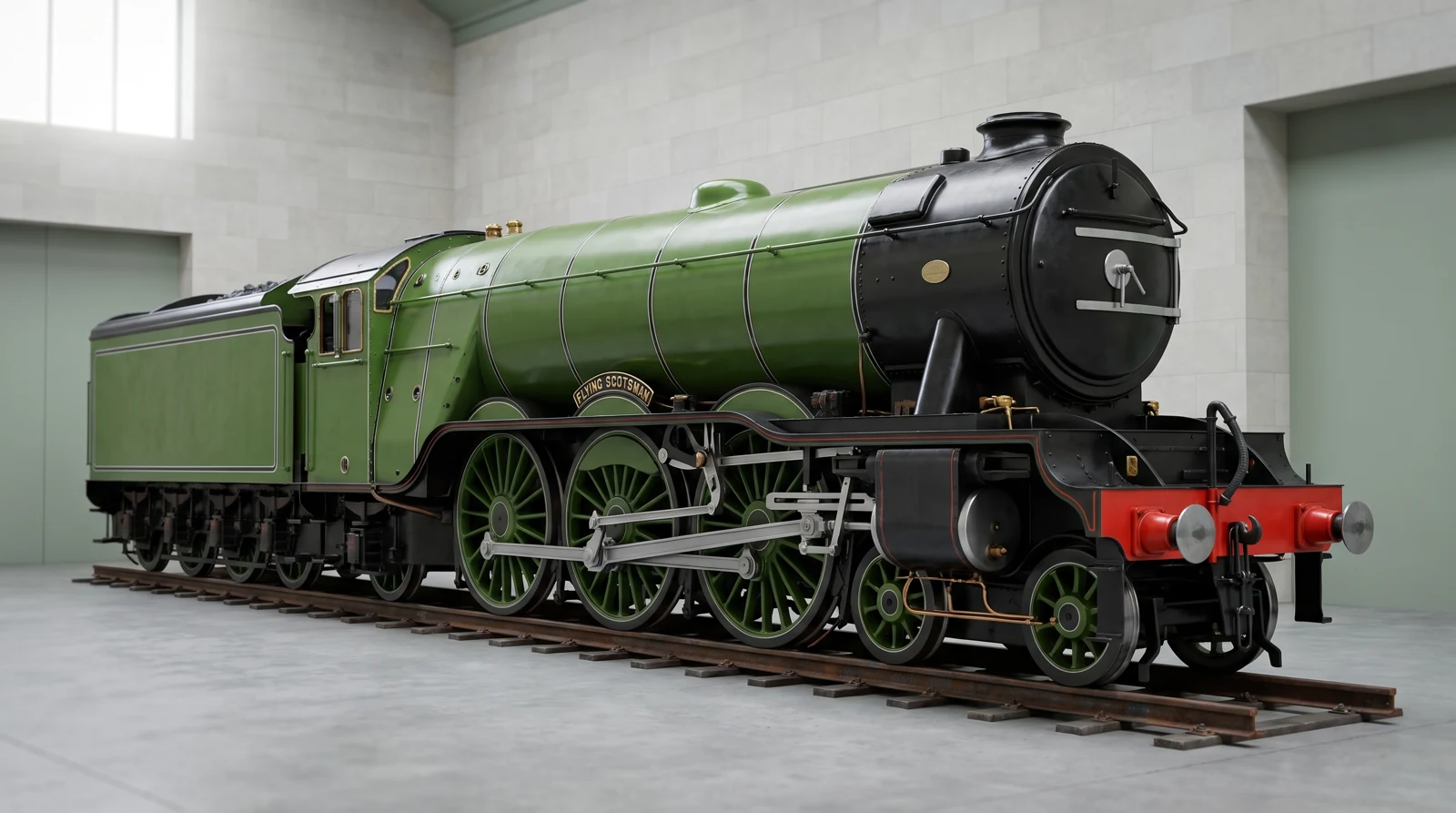 Flying Scotsman
 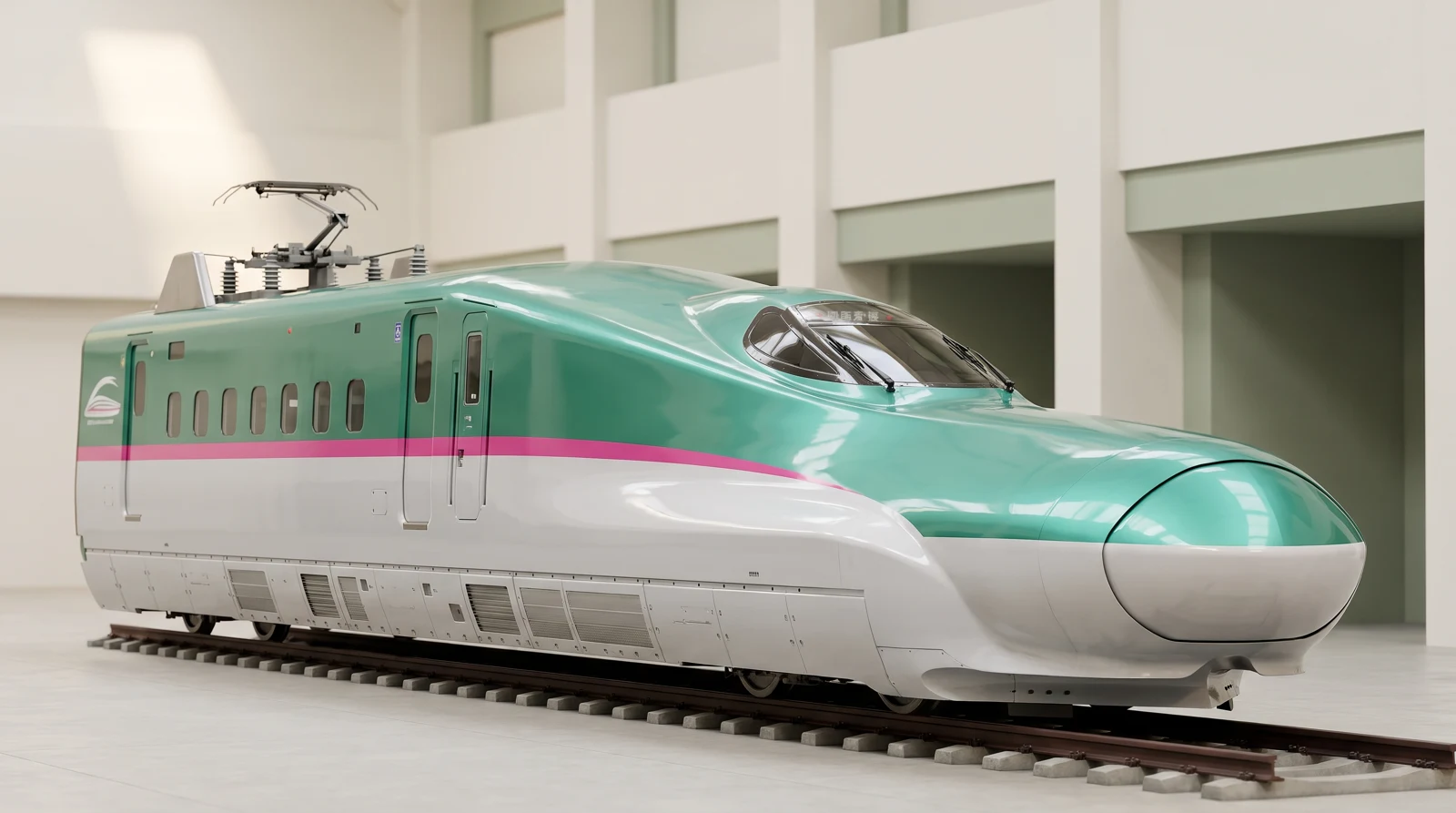 E5 Shinkansen
 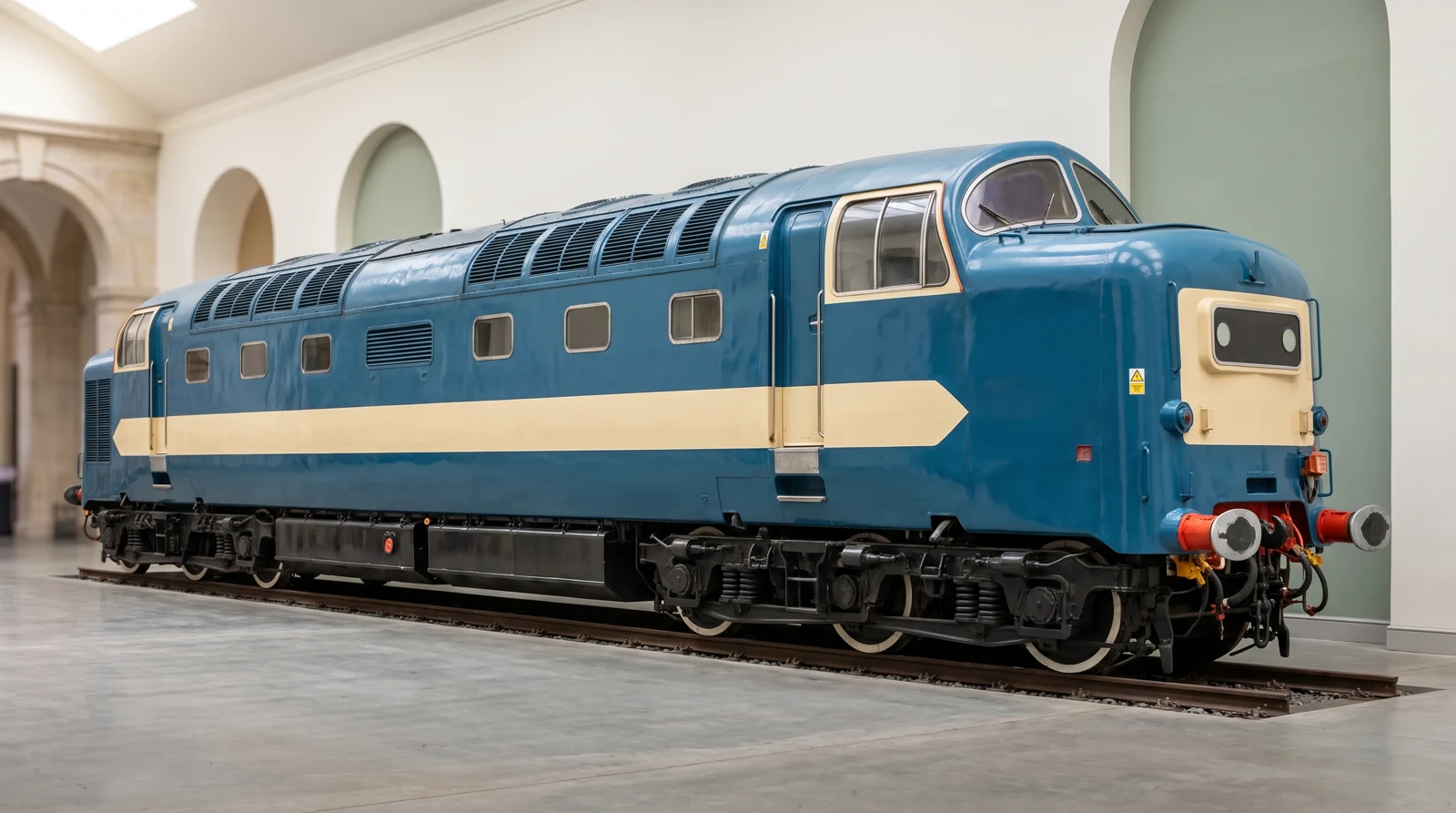 English Electric DP1 Deltic