Skip to the museum
RAIL ATLASby Train Life
United Kingdom · Classic electrics

BR Class 92

Classic electric

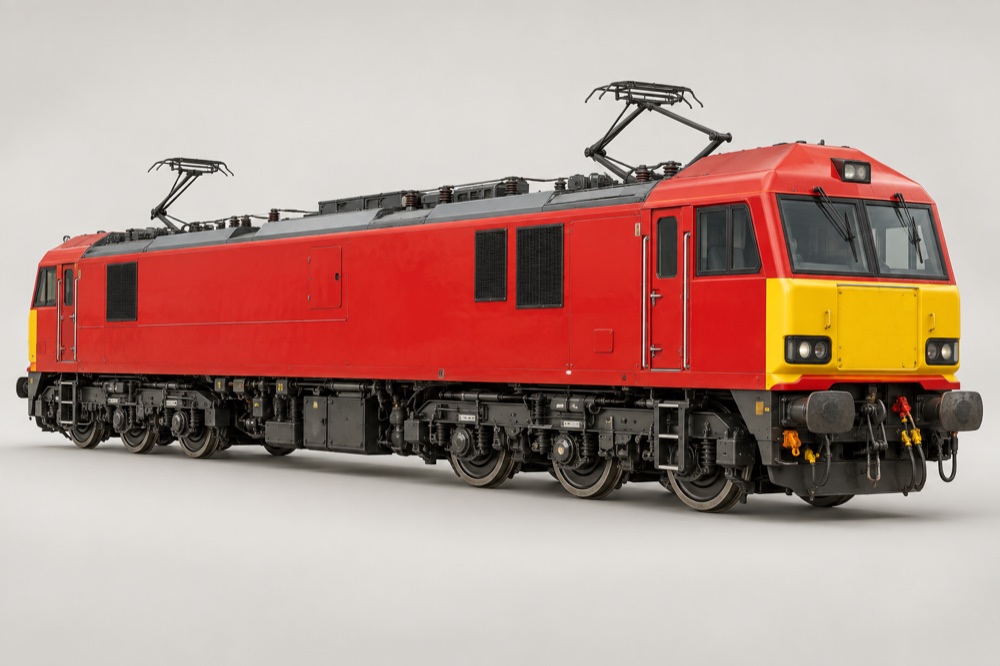
Class 92 was designed for work including Channel Tunnel services. It is an electric locomotive with several power-supply capabilities. Crossing between railway networks can require more than one electrical system.

Speed
90mph145 km/hTechnical maximum · 90 mph
Year
1993Reference year
Maker
See the train file below
Job
Electric freight and passenger design
Illustration of BR Class 92
Train portrait · illustrated learning model
Turn it. Take it apart. Discover.

Explore your train

Interactive model loads here. Read the train guide below while it gets ready.
3D model

Drag to turn · Pinch to zoom · Tap a number to explore

INSIDE THE TRAIN

What makes an electric train electric?

A collector takes electricity from the overhead wire. Electrical equipment prepares that power, and motors turn the wheels.

  1. 1
    The locomotive’s frontAt the front

    Look at the cab windows, lamps and couplings. Older electric locomotives have many different body shapes.

    Look deeper

    A powerful electric locomotive designed for Channel Tunnel and other freight and passenger work. It is not diesel powered.

  2. 2
    The driver’s cabInside the car body

    The cab is the driver’s workplace; the rest of this locomotive contains traction equipment.

    Look deeper

    A powerful electric locomotive designed for Channel Tunnel and other freight and passenger work. It is not diesel powered.

  3. 3
    An arm that collects powerOn the roof

    This spring-loaded arm touches an overhead wire and collects electricity for the train.

    Look deeper

    This locomotive collects external electrical power. The B&O switcher uses a trolley pole; the other examples show pantographs.

  4. 4
    More than just wheelsUnder the body

    A bogie is the frame that holds a group of wheels. Springs help make the ride smoother.

    Look deeper

    Wheelsets, suspension and braking equipment form part of the running gear. Powered bogies also carry traction motors. This simplified model does not reproduce a specific bogie or show every motor and brake.

  5. 5
    The equipment below your feetBelow the floor

    Electrical boxes help turn electricity into the power the motors need. They share space with other equipment underneath the train.

    Look deeper

    Electrical equipment is housed within or beneath the locomotive. The separated model is a schematic teaching view.

01 / THE TRAIN FILE

Get to know BR Class 92

Engineering explained

How does it move — and what is its job?

Electricity from outside the train powers motors that turn its wheels.

Electric locomotives do not need an onboard diesel engine. Gearing, wheel grip, braking and the railway’s rules help decide their speed. A freight engine can be designed for strong pulling rather than fast travel.
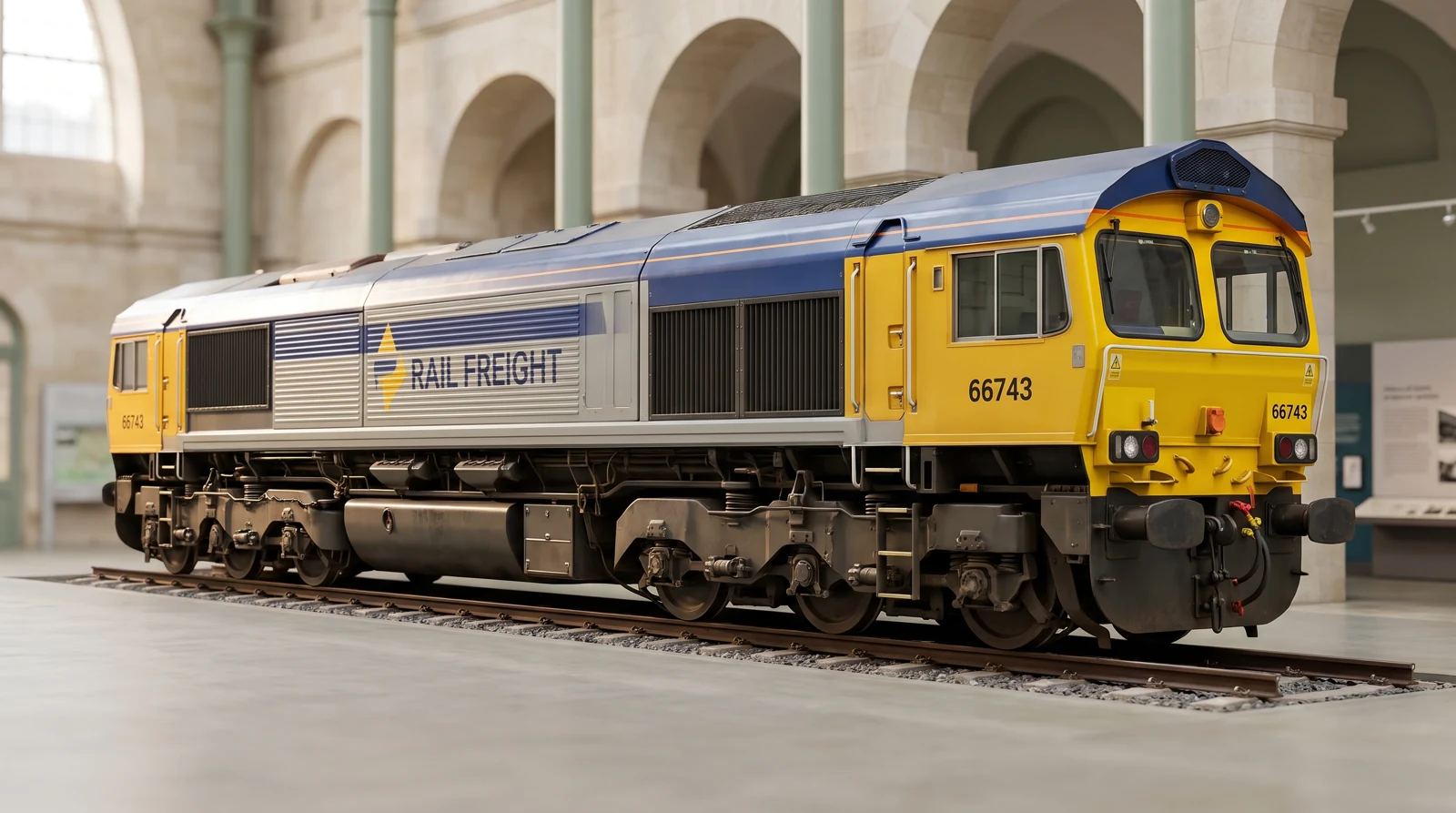
Catalogue background

When was it built?

1993 is a reference year in the supplied train book.

This may describe a design, a prototype or the photographed locomotive. We have not yet verified the exact construction date, so it is not labelled as a birthday.

What are we still researching?

We leave gaps visible instead of guessing. The original catalogue and our learning model do not establish every real-world specification.

Where was it built?

The catalogue connects this train with United Kingdom / Channel Tunnel routes. That may be where it worked, rather than the factory that built it.

What is it made from?

A train uses different materials for different jobs: metals for strength, glass for windows and insulating materials around wires. Paint colour cannot tell us whether the body underneath is steel or aluminium.

Where does it run — or where did it run?

Known background: United Kingdom / Channel Tunnel routes. Its job: electric freight and passenger design. A country name alone does not tell us which line it used.

Is it still running today?

Old photographs and launch announcements do not prove that a train still runs. A whole class may still work even after one member retires. We need a recent operator or museum source.

02 / FOLLOW THE ENERGY

How power reaches the wheels

Follow these steps, then find the matching sections in the model above.

  1. 1

    External power

    A collector takes electricity from the railway.

  2. 2

    Electrical equipment

    It controls the supply reaching the motors.

  3. 3

    Traction motors

    Electric motors turn the drive system.

  4. 4

    Wheels

    Powered wheelsets turn against the rails.

Read the wheels

Co-Co is the arrangement recorded for this exhibit. In common letter notation, B means two powered axles and C means three. A small “o” means the axles have individual motors. Wheel-count and axle-count systems are different, so always check the notation before comparing.

03 / NUMBERS WITH A STORY

What does its speed really mean?

Technical maximum · 90 mph. A maximum speed describes particular conditions; station stops, curves, signals and track limits make an actual journey slower.

A fast train is a whole system: vehicle, track, electricity or fuel, brakes, signalling and trained people. A race in the game is a simplified comparison.

04 / BIG QUESTIONS, CLEAR ANSWERS

What curious kids ask

Does an electric train need a big battery?

It can take electricity from the railway while it moves, using a roof collector or another pickup system. Some trains have batteries for special jobs, but electric does not automatically mean battery-powered.

Does the driver steer like a car?

No steering wheel is needed to choose a direction. The rails guide the wheelsets. At a junction, movable sections of rail called points or switches guide the train onto another track. The driver controls speed and braking.

Why can’t it stop straight away?

A moving train has energy. Brakes must remove that energy to slow it down. A heavy train travelling fast needs room to stop, so railway signals help keep trains safely separated.

05 / KEEP EXPLORING

Meet these trains next

Compare how they look, what they carry and where their power comes from.

Little railway dictionary

Bogie / truck

A frame holding wheelsets beneath a vehicle. It can turn relative to the body to help the train follow curves.

Gauge

The distance between the inside faces of the two running rails. Narrow gauge means closer rails; loading gauge describes the space a train may occupy.

Pantograph

A folding roof collector that stays in contact with an overhead power wire.

Traction

The force used to pull or propel the train. Grip between wheels and rails limits how much force can be used.

Multiple unit

A train with propulsion equipment within its passenger vehicles, operated together from one cab.

Locomotive

A powered vehicle whose main job is to move other railway vehicles.

Shunting / switching

Moving and arranging vehicles in a yard, often at low speed.

Livery

The colours, stripes, logos and other markings painted or applied to a train.

Service speed

The permitted speed for passenger or freight operation on a suitable section. It is not the journey average.

Record speed

A speed achieved on a particular test or record attempt, sometimes with special equipment and conditions.

Tender

A vehicle coupled to a steam locomotive to carry extra water and fuel. A tank engine carries water on the locomotive itself.

Prototype

An early vehicle built to develop and test a design before a production fleet.

THE REFERENCE SHELF

Sources & reading

Follow the operator, builder and museum references below for more detail. Links beside an answer show which source supports that answer.

  1. GB Railfreight · locomotive specifications ↗

Edition 2026-09-27. Catalogue background is carried forward from the original collection; it is not a new independent verification. Engineering explanations describe principles. Portraits and 3D models are illustrations, with simplified parts and proportions. This is an independent learning guide, not an operator’s timetable.