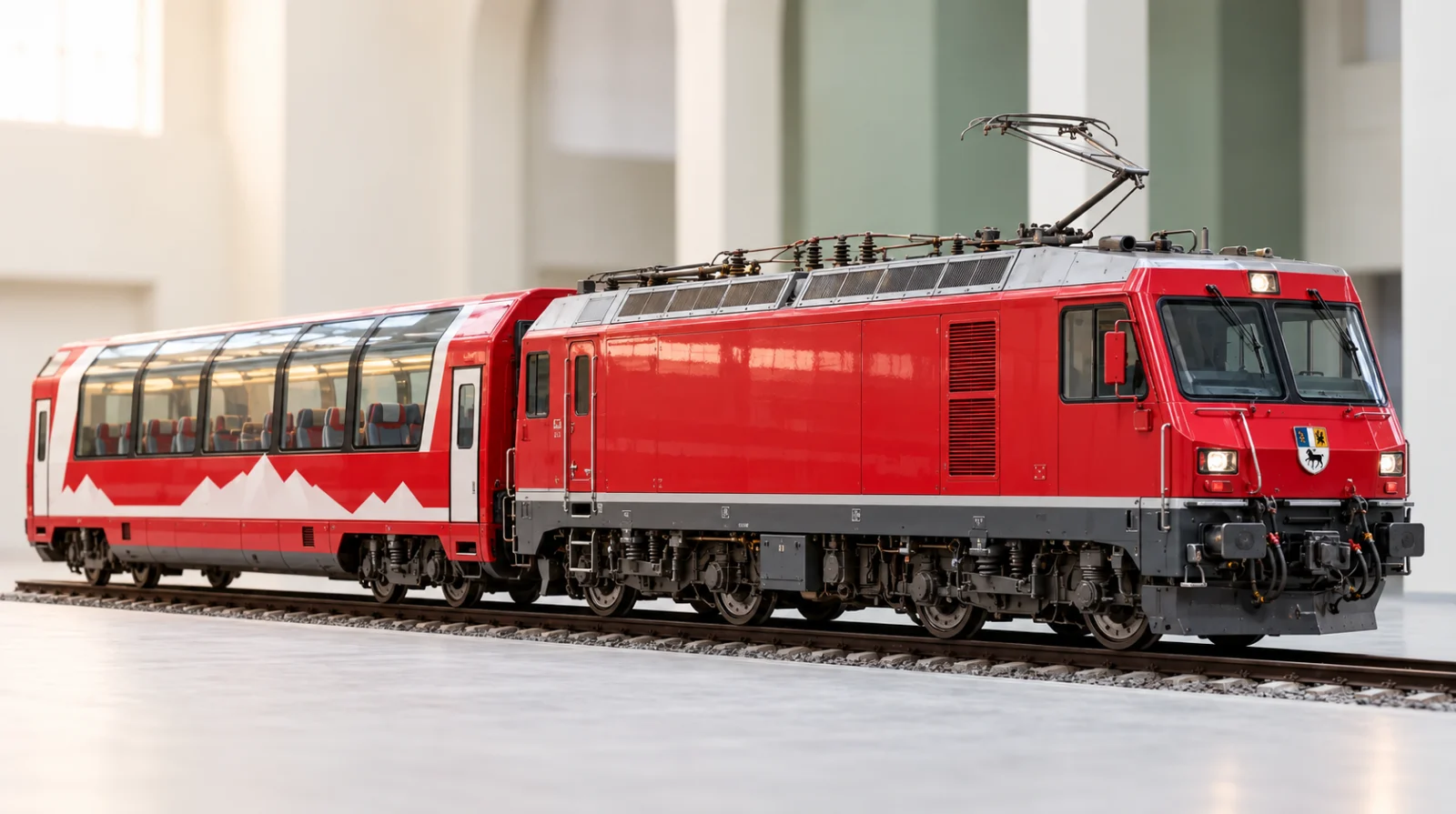
The Glacier Express crosses the Swiss Alps from Zermatt to St. Moritz in about eight hours. It rolls over 291 bridges, including the tall stone Landwasser Viaduct, and through 91 tunnels. It is called the slowest express train in the world, so passengers have time to enjoy the snowy mountains through its big panoramic windows.
Interactive model loads here. Read the train guide below while it gets ready.
3D model
Drag to turn · Pinch to zoom · Tap a number to explore
INSIDE THE TRAIN
What makes an electric train electric?
A collector takes electricity from the overhead wire. Electrical equipment prepares that power, and motors turn the wheels.
1
The locomotive’s frontAt the front
Look at the cab windows, lamps and couplings. Older electric locomotives have many different body shapes.
Look deeper
The Glacier Express has linked Zermatt and St. Moritz since 25 June 1930. Its roughly 290 km trip takes about eight hours and crosses 291 bridges, including the Landwasser Viaduct, and runs through 91 tunnels on metre-gauge track. The highest point is the Oberalp Pass at 2,033 m. Rhaetian Railway Ge 4/4 III electric locomotives, built from 1993, haul it on the Graubünden section. They are rated for 100 km/h, but steep grades and tight curves keep the average near 37 km/h, which is why it is called the slowest express train in the world. The panoramic coaches have windows that curve up into the roof. The model shows a representative locomotive with three panoramic coaches.
2
The driver’s cabInside the car body
The cab is the driver’s workplace; the rest of this locomotive contains traction equipment.
Look deeper
The Glacier Express has linked Zermatt and St. Moritz since 25 June 1930. Its roughly 290 km trip takes about eight hours and crosses 291 bridges, including the Landwasser Viaduct, and runs through 91 tunnels on metre-gauge track. The highest point is the Oberalp Pass at 2,033 m. Rhaetian Railway Ge 4/4 III electric locomotives, built from 1993, haul it on the Graubünden section. They are rated for 100 km/h, but steep grades and tight curves keep the average near 37 km/h, which is why it is called the slowest express train in the world. The panoramic coaches have windows that curve up into the roof. The model shows a representative locomotive with three panoramic coaches.
3
An arm that collects powerOn the roof
This spring-loaded arm touches an overhead wire and collects electricity for the train.
Look deeper
This locomotive collects external electrical power. The B&O switcher uses a trolley pole; the other examples show pantographs.
4
More than just wheelsUnder the body
A bogie is the frame that holds a group of wheels. Springs help make the ride smoother.
Look deeper
Wheelsets, suspension and braking equipment form part of the running gear. Powered bogies also carry traction motors. This simplified model does not reproduce a specific bogie or show every motor and brake.
5
The equipment below your feetBelow the floor
Electrical boxes help turn electricity into the power the motors need. They share space with other equipment underneath the train.
Look deeper
Electrical equipment is housed within or beneath the locomotive. The separated model is a schematic teaching view.
01 / THE TRAIN FILE
Get to know Glacier Express
Engineering explained
How does it move — and what is its job?
Electricity from outside the train powers motors that turn its wheels.
Electric locomotives do not need an onboard diesel engine. Gearing, wheel grip, braking and the railway’s rules help decide their speed. A freight engine can be designed for strong pulling rather than fast travel.
Catalogue background
When was it built?
1930 — First Glacier Express.
Catalogue milestone: Ge 4/4 III locomotives 1993–1999 · panoramic coaches from 2006. A delivery, a first test and a first passenger trip are different events. Individual vehicles can be built in different years.
We leave gaps visible instead of guessing. The original catalogue and our learning model do not establish every real-world specification.
Where was it built?
The catalogue connects this train with Switzerland; Zermatt to St. Moritz. That may be where it worked, rather than the factory that built it.
What is it made from?
A train uses different materials for different jobs: metals for strength, glass for windows and insulating materials around wires. Paint colour cannot tell us whether the body underneath is steel or aluminium.
Where does it run — or where did it run?
Known background: Switzerland; Zermatt to St. Moritz. Its job: scenic journeys through the swiss alps. A country name alone does not tell us which line it used.
Is it still running today?
Old photographs and launch announcements do not prove that a train still runs. A whole class may still work even after one member retires. We need a recent operator or museum source.
02 / FOLLOW THE ENERGY
How power reaches the wheels
Follow these steps, then find the matching sections in the model above.
1
External power
A collector takes electricity from the railway.
2
Electrical equipment
It controls the supply reaching the motors.
3
Traction motors
Electric motors turn the drive system.
4
Wheels
Powered wheelsets turn against the rails.
Read the wheels
Look underneath: wheelsets support the train and carry the forces used to accelerate and brake. The model simplifies the real running gear.
03 / NUMBERS WITH A STORY
What does its speed really mean?
Locomotive maximum · 100 km/h. A maximum speed describes particular conditions; station stops, curves, signals and track limits make an actual journey slower.
A fast train is a whole system: vehicle, track, electricity or fuel, brakes, signalling and trained people. A race in the game is a simplified comparison.
04 / BIG QUESTIONS, CLEAR ANSWERS
What curious kids ask
Does an electric train need a big battery?
It can take electricity from the railway while it moves, using a roof collector or another pickup system. Some trains have batteries for special jobs, but electric does not automatically mean battery-powered.
Does the driver steer like a car?
No steering wheel is needed to choose a direction. The rails guide the wheelsets. At a junction, movable sections of rail called points or switches guide the train onto another track. The driver controls speed and braking.
Why can’t it stop straight away?
A moving train has energy. Brakes must remove that energy to slow it down. A heavy train travelling fast needs room to stop, so railway signals help keep trains safely separated.
05 / KEEP EXPLORING
Meet these trains next
Compare how they look, what they carry and where their power comes from.
Edition 2026-09-27. Catalogue background is carried forward from the original collection; it is not a new independent verification. Engineering explanations describe principles. Portraits and 3D models are illustrations, with simplified parts and proportions. This is an independent learning guide, not an operator’s timetable.
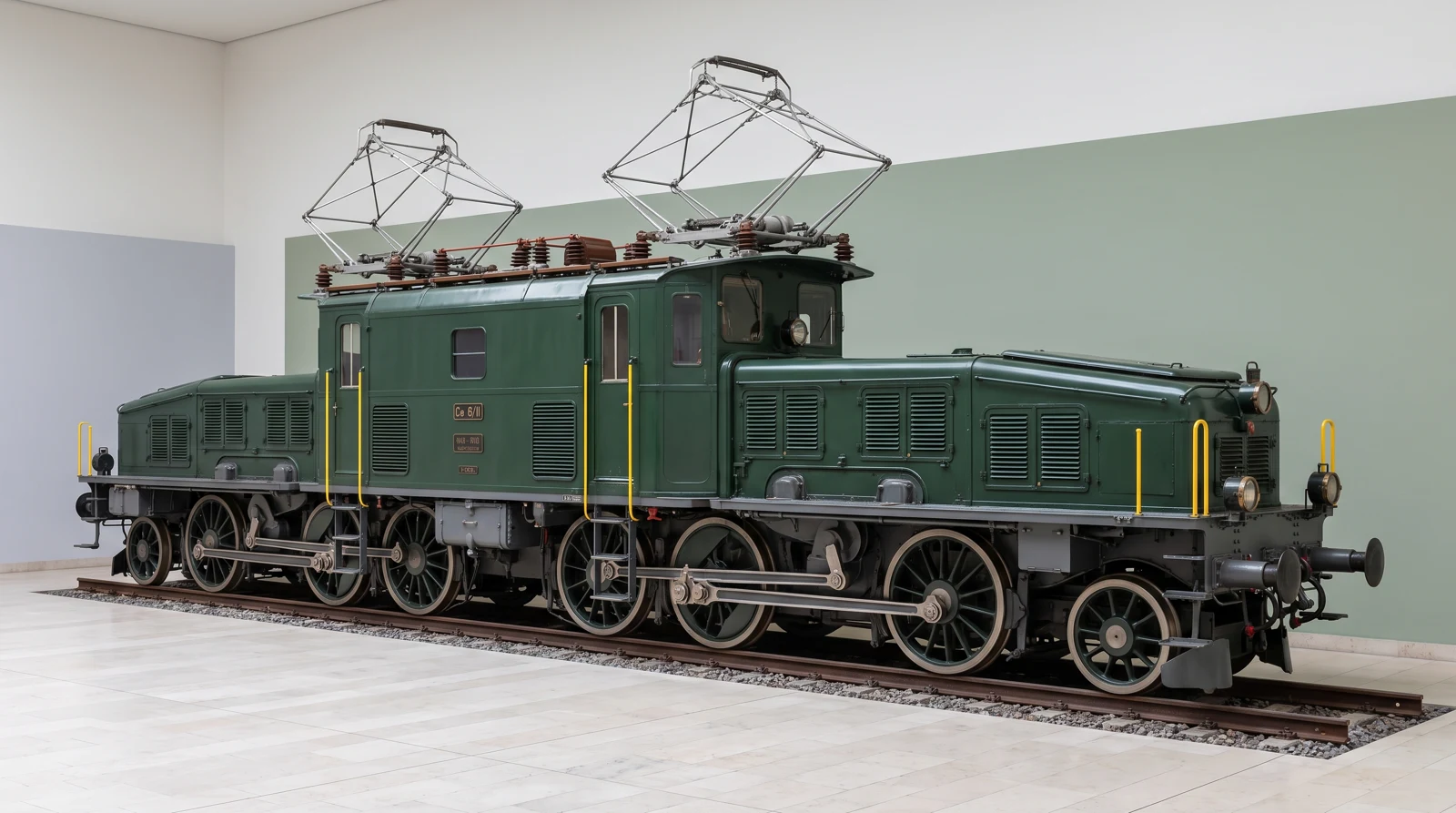 SBB Ce 6/8 Crocodile
 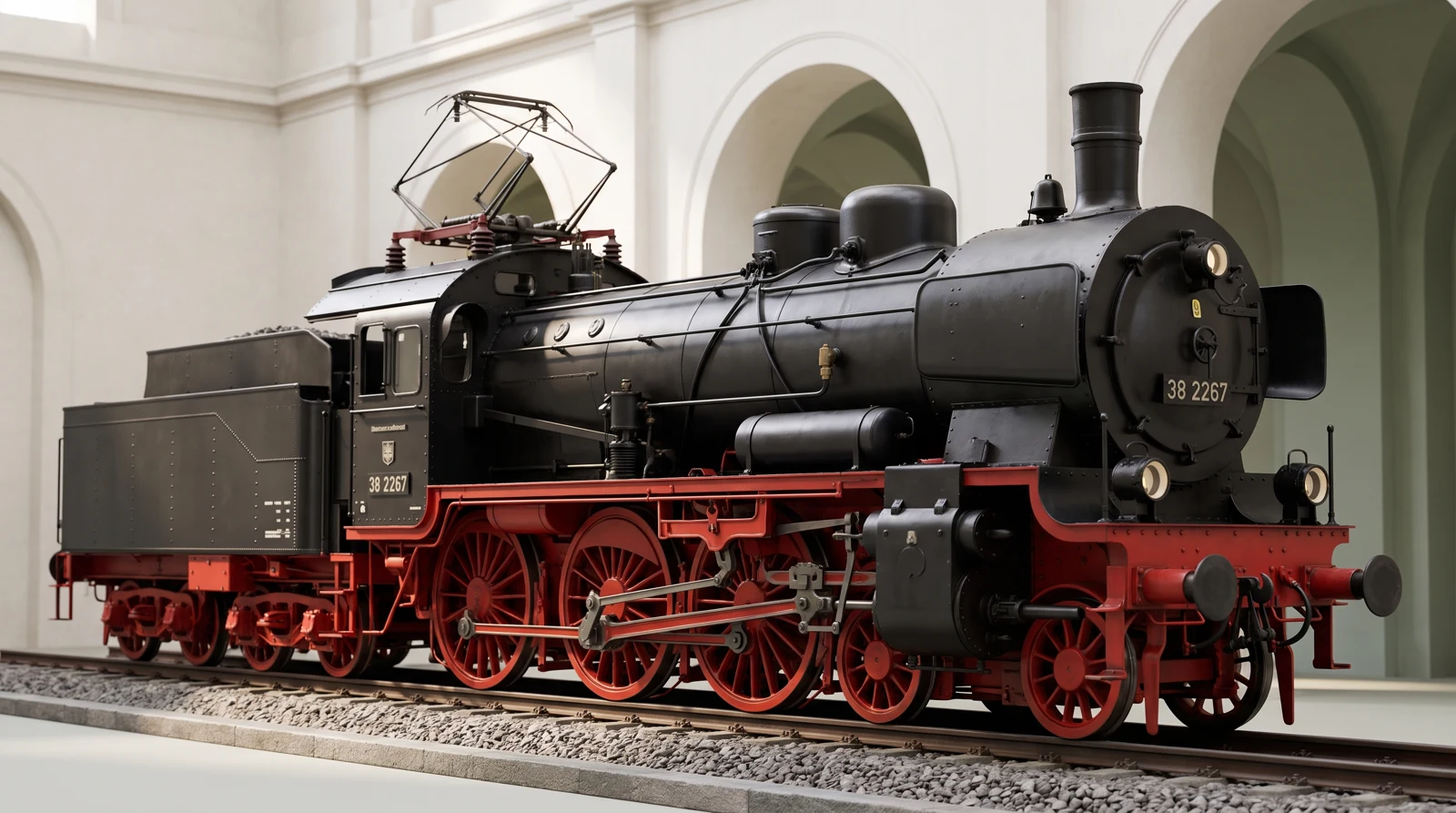 Prussian P8
 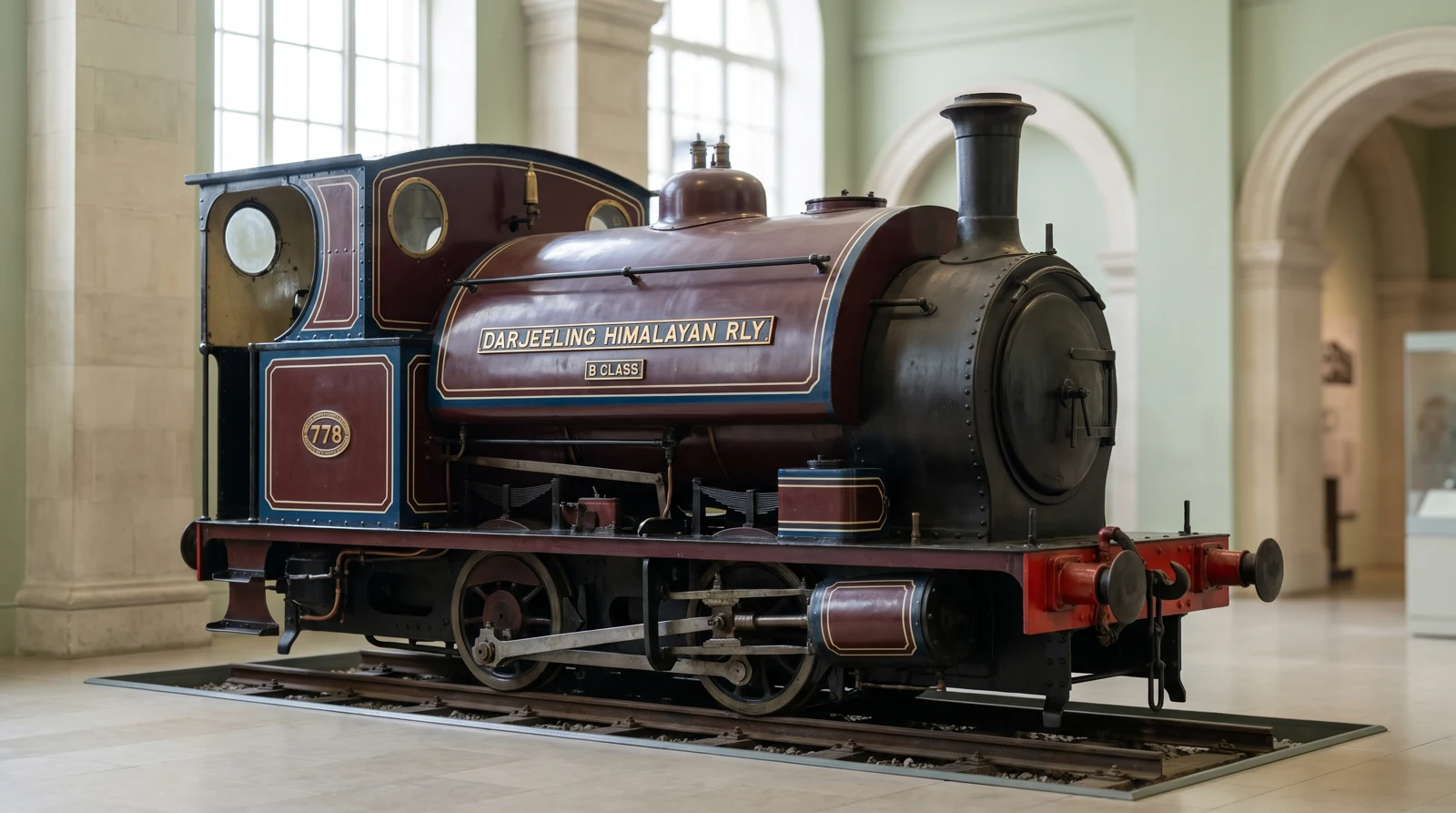 DHR Class B